What Are Index Funds?
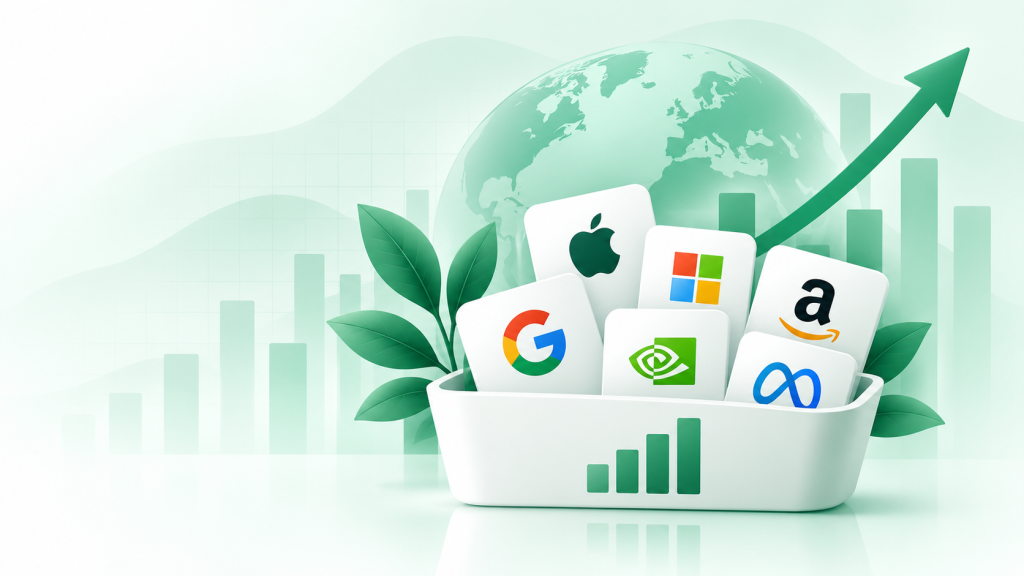
Index funds are one of the simplest ways to invest in a large number of companies at once. Instead of choosing individual stocks, an investor buys a fund that tracks a specific market index.
This approach makes it possible to build a diversified portfolio without constantly analysing dozens or hundreds of companies.
How Does an Index Fund Work?
An index represents a particular part of the market. For example, the S&P 500 includes around 500 large U.S. companies, while the MSCI World covers companies from many developed countries.
An index fund aims to replicate the composition and performance of its chosen index. If the companies in the index rise in value overall, the fund will generally rise as well. If the market falls, the value of the fund may also decline.
Instead of buying every stock separately, an investor can simply buy shares of the fund.
Why Invest Through an Index?
The main advantage is diversification.
When you invest in a single company, your investment depends heavily on that company’s performance. With an index fund, your money is spread across many companies, industries and, in some cases, countries.
Index investing also removes the need to constantly guess which company might become the next successful investment. Instead, investors can participate in the performance of a broader market.
Are Index Funds and ETFs the Same Thing?
Not exactly.
An index fund is a fund designed to follow a particular market index. An ETF (Exchange-Traded Fund) is a fund whose shares can be bought and sold on a stock exchange, much like ordinary stocks.
Many popular ETFs are index funds, which is why the two terms are often used together.
For European investors, ETFs are one of the most common ways to access index investing.
Are Index Funds Suitable for Long-Term Investing?
Index funds are commonly used as part of a long-term investment strategy. Instead of trying to predict short-term market movements, investors can invest regularly and gradually build their portfolios.
However, returns are never guaranteed. The value of investments can rise or fall, and past market performance does not guarantee future results.
Conclusion
Index funds allow investors to invest in many companies through a single investment product. They make diversification easier and can work well with a long-term investment approach.
The next step is to understand what ETFs are and how to choose the right fund.